

Beyond Wealth Creation: Preparing the Next Generation to Preserve Your Legacy

Beyond Wealth Creation: Preparing the Next Generation to Preserve Your Legacy Wealth creation has been a major conversation for individuals, families and businesses alike, but far less attention is paid to the equally important question of how that wealth can be preserved across generations. Many successful individuals devote decades to building wealth. They establish businesses, acquire investment portfolios, purchase real estate, and create financial security that can last for generations. Yet one important question is often overlooked: Will the next generation know how to preserve and grow that wealth? For many families, succession planning begins and ends with writing a will or establishing a trust. While these are essential legal tools, they only determine who inherits the assets, not whether those assets will endure. Without financial knowledge, discipline and shared family values, even substantial fortunes can disappear within a generation. The saying “shirtsleeves to shirtsleeves in three generations” has endured for centuries because it reflects a common reality. The first generation creates wealth through hard work and sacrifice. The second enjoys its benefits. By the third, much of the wealth has often been depleted through poor financial decisions, family disputes or a lack of preparation. The difference between families that sustain wealth and those that lose it rarely lies in the size of their fortune. It lies in how well they prepare the next generation. Wealth Is More Than Money Financial capital is only one component of generational wealth. Equally important is human capital, the knowledge, skills and values that enable future generations to make sound financial decisions. Children who grow up understanding budgeting, investing, entrepreneurship and long-term financial planning are more likely to become responsible stewards of family wealth. Conversely, those who inherit wealth without financial education may view it as an endless resource rather than a responsibility. Teaching children about money should not begin when they become adults or after they inherit assets. It should start early through age-appropriate conversations about saving, investing, delayed gratification, and financial responsibility. As they mature, they should gradually be exposed to more sophisticated concepts such as portfolio diversification, business ownership, risk management, and philanthropy. Family Governance Matters Successful families increasingly recognize that preserving wealth requires structure. This is where family governance becomes critical. Family governance establishes clear principles for how wealth will be managed, how major decisions will be made, and how future generations will participate in overseeing family assets. It provides a framework that reduces conflict, aligns expectations and promotes accountability. This may include regular family meetings, documented investment principles, defined roles and responsibilities, and mechanisms for resolving disagreements. More importantly, it creates opportunities for younger family members to learn directly from those who built the family’s wealth. When wealth is accompanied by transparency and shared purpose, families are better positioned to preserve both their assets and their relationships. Succession Is a Process, Not an Event Many business owners postpone succession planning because it feels premature or uncomfortable. However, succession is not a document prepared at retirement; it is a gradual process of developing capable successors. Whether the family wealth is concentrated in a business, investment portfolio or real estate, the next generation should be progressively involved in understanding how those assets are managed. This includes participating in strategic discussions, learning how investment decisions are made, and understanding the risks associated with preserving wealth. A well-prepared successor is not simply someone who inherits ownership but someone who possesses the knowledge, judgement and confidence to manage wealth responsibly. Building a Lasting Legacy Creating wealth is a remarkable achievement. Preserving it across generations requires an equally deliberate commitment to education, governance and long-term planning. Families that invest in financial literacy, establish clear governance structures and prepare future generations for leadership are more likely to see their wealth continue creating opportunities long after the founders are gone. Ultimately, the greatest inheritance parents can leave their children is not simply financial assets, but the wisdom to manage them responsibly. At Parthian Capital Limited, we believe that wealth management extends beyond growing portfolios. It is about helping families build enduring legacies through sound investment advice and the financial education needed to empower future generations.
The Wealth Trap: Why High Income Doesn’t Always Lead to Wealth

The Wealth Trap: Why High Income Doesn’t Always Lead to Wealth “It’s not how much you earn that determines your wealth; it’s how effectively you put your money to work.” In today’s economy, earning a high income is often mistaken for being wealthy. Promotions, business success, bonuses, and rising incomes are widely celebrated as indicators of financial prosperity. Yet, some of the highest-paid professionals and business owners continue to struggle with financial security, while others with relatively modest incomes quietly build substantial wealth over time. The difference is simple but profound: income creates wealth potential, but investments create wealth. This distinction has become even more important in an environment characterized by persistent inflation, elevated interest rates, and rising living costs. As incomes increase, so too do financial obligations. Without a deliberate investment strategy, higher earnings can become a pathway to higher spending rather than lasting financial independence. The Wealth Trap The wealth trap occurs when rising income leads to rising consumption instead of rising investments. Many professionals experience significant improvements in earnings throughout their careers. A promotion leads to a larger home, a newer vehicle, private school fees, luxury holidays, premium subscriptions, and higher day-to-day expenses. While these decisions may reflect an improved standard of living, they often leave little room for wealth accumulation. Ironically, the higher the income, the easier it becomes to justify higher spending. This phenomenon, commonly referred to as lifestyle inflation, explains why many high-income earners remain financially vulnerable despite earning multiples of the average salary. Their income supports an expensive lifestyle, but very little of it is converted into assets that generate future income. Income funds today’s lifestyle but Wealth funds tomorrow’s freedom. Income Is Temporary. Wealth Is Enduring. Income is a cash flow while Wealth is a stock. Income depends on one’s ability to continue working, running a business, or generating active earnings. Wealth, however, consists of financial assets that continue to appreciate and generate returns irrespective of whether the owner is actively working. A portfolio of government securities continues to generate interest. Dividend-paying equities distribute income. Mutual funds provide diversified market exposure. Real estate generates rental income. Businesses create enterprise value. These assets continue working even when their owners are not. The transition from being a high-income earner to becoming truly wealthy occurs when earned income is consistently converted into productive assets. Inflation Makes Saving Alone Insufficient One of the greatest misconceptions about wealth creation is that saving money is enough. In reality, inflation steadily erodes the purchasing power of idle cash. Even in periods when inflation moderates, prices continue to rise, meaning that cash held outside productive investments gradually loses value in real terms. This is why wealth creation requires more than accumulating bank balances. Capital must be invested in assets capable of delivering returns above inflation over the long term. For investors, preserving purchasing power is just as important as generating returns. Diversification Is the Foundation of Wealth Preservation Successful investors understand that wealth is not built by chasing the highest returns but by balancing risk and return across different asset classes. A well-diversified portfolio typically combines assets with different risk and return characteristics. Fixed-income securities provide stability, predictable income, and capital preservation. Equities offer long-term capital appreciation and the potential to outperform inflation over extended periods. Mutual funds provide professional management and diversification, while alternative investments and real assets can enhance portfolio resilience. The appropriate mix depends on an investor’s objectives, investment horizon, liquidity needs, and risk tolerance. The objective is not simply to maximize returns but to build a portfolio capable of creating and preserving wealth across changing market conditions. Why Market Cycles Shouldn’t Dictate Investment Decisions Many investors attempt to time financial markets, increasing investments only when markets appear favourable and withdrawing when uncertainty rises. History suggests that this approach often destroys value. Periods of market volatility frequently create opportunities to accumulate quality assets at attractive valuations. Likewise, periods of elevated interest rates may present compelling opportunities for fixed-income investors to lock in attractive yields. Successful wealth creation is rarely about perfectly timing the market. It is about remaining invested through market cycles while maintaining a disciplined asset allocation strategy. Consistency often outperforms perfection. Building Wealth Requires Purposeful Financial Decisions Every increase in income presents a choice. One option is to increase consumption while the other is to increase ownership. Ownership of productive assets creates financial resilience. It provides additional income streams, protects purchasing power, and builds intergenerational wealth. For many investors, this means adopting a structured investment plan rather than investing only when surplus cash becomes available. Regular portfolio reviews, disciplined rebalancing, and alignment with long-term financial goals are often more important than attempting to identify the next high-performing investment. The Nigerian Context Nigeria’s evolving macroeconomic environment has reinforced the importance of strategic wealth management. While economic reforms are gradually improving market efficiency and creating new investment opportunities, they have also been accompanied by periods of elevated inflation, higher interest rates, and exchange rate adjustments. These conditions present both challenges and opportunities. Higher interest rates have improved returns on fixed-income instruments, offering attractive income opportunities for conservative investors. At the same time, market corrections and economic transformation continue to create selective opportunities within the equities market for investors with a long-term horizon. In this environment, wealth preservation is no longer about avoiding risk altogether. It is about understanding risk, diversifying intelligently, and positioning portfolios to benefit from changing market conditions. Final Thoughts Building wealth is not determined by the size of one’s income but by the quality of one’s financial decisions. High income provides the opportunity to accumulate wealth, but only disciplined investing transforms that opportunity into lasting financial security. Those who consistently convert income into productive assets are better positioned to preserve purchasing power, generate sustainable returns, and achieve long-term financial independence. The true measure of wealth is not the lifestyle that income can support today, but the portfolio of assets capable of sustaining that lifestyle tomorrow. As investors navigate an increasingly complex economic landscape, the question is no longer “How much do I earn?” but rather “How much of what I earn is working for me?” Those who answer that question well are the ones who escape the wealth trap.
What High-Net-Worth (HNW) Investors Do Differently During Economic Uncertainty

What High-Net-Worth (HNW) Investors Do Differently During Economic Uncertainty Every economic cycle tests investors. When market performance is positive, liquidity is abundant, and optimism dominates the headlines, almost everyone appears to be a good investor. But periods of uncertainty reveal the difference between those chase short term gains (Band wagon players) and those who preserve and grow it across generations. Over the past few years, Nigeria’s economic landscape has been defined by aggressive structural changes. While retail markets often react with anxiety to a shift in interest rates, changes in consumer spending patterns, and evolving fiscal reforms, these conditions reveal a defining characteristic of high-net-worth (HNW) investors: they do not respond to uncertainty the way everyone else does. Rather than making emotional decisions, they rely on discipline, systemized strategy, and a long-term perspective. They Focus on Wealth Creation And Preservation, Not Quick Wins One of the biggest mistakes investors make during periods of economic uncertainty is prioritizing short-term gains over long-term wealth creation. High-net-worth investors take a different approach. They understand that building wealth is not about chasing every opportunity that promises outsized returns; it is about growing and protecting capital over time. Rather than asking, “How much can I make?”, they first ask, “How do I preserve what I have while positioning myself for growth?” This mindset helps them avoid emotional decisions and speculative investments that often emerge during volatile market conditions. In uncertain economic environments, protecting purchasing power becomes just as important as generating returns. While many investors react to market movements by rushing into perceived safe havens, affluent investors focus on opportunities that align with their long-term financial objectives and risk tolerance. In Nigeria’s current environment, for example, elevated yields on Treasury Bills, Money Market Funds, and other fixed-income instruments have created attractive opportunities for capital preservation and steady income generation. Rather than viewing these investments as merely defensive, sophisticated investors see them as strategic tools for maintaining liquidity, earning competitive returns, and preserving wealth while waiting for other opportunities to emerge. The goal is not simply to make money quickly; it is to build a resilient portfolio that can withstand economic cycles, preserve capital, and create sustainable wealth over the long term. High-net-worth investors recognize that lasting wealth is rarely the result of a single winning investment. It is the outcome of disciplined decision-making, prudent risk management, and a consistent focus on long-term value creation. They View Volatility as an Opportunity, Not a Threat Economic transitions often trigger retail fear. When asset prices fluctuate, the instinctive reaction for many is to retreat entirely or postpone decisions until conditions appear perfectly stable. HNW investors take the exact opposite approach. They recognize that market pullbacks create elite entry windows to acquire fundamentally sound assets at attractive valuations. Consider the broader equities market. Following an unprecedented bull run in early 2026 where the NGX All-Share Index advanced by over 47%, the market experienced a sharp bearish correction that wiped trillions off market capitalization. While retail forums flooded with panic, institutional and high-net-worth capital viewed the dip as a tactical buying opportunity. Instead of trying to time the absolute bottom of the market, they actively cherry-picked resilient mid-cap and premium-board equities at a discount, positioning their portfolios ahead of the upcoming H1 corporate earnings releases. History consistently shows that some of the greatest wealth-building structures are cemented during periods of short-term disruption. They Separate Wealth from Income One of the most overlooked lessons in wealth management is the distinction between income and wealth. Many successful professionals and business owners earn substantial operational incomes but remain heavily dependent on those active cash flows to maintain their lifestyle. True wealth is measured by productive assets that continue to generate value independent of active work. During periods of economic readjustment, this distinction becomes non-negotiable. Affluent investors continuously evaluate their concentration risk. They look at whether their financial survival is tied to a single operating business, executive salary, or a specific industry sector. By systematically moving excess cash flow into diversified, yield-generating portfolios, they build a fortress of sustainable passive cash flow that insulates their lifestyle from localized sector shocks. They Prioritize Dynamic Liquidity Many investors underestimate the value of liquidity until a crisis hits or a sudden opportunity knocks. True liquidity is the difference between being forced to fire-sell assets under pressure and having the ability to make strategic, offensive allocations from a position of strength. However, HNW investors /investing does not mean keeping massive amounts of cash idle to be eroded by inflation. Rather, it means structuring portfolios to ensure rapid capital mobility and ensuring that all cash assets are yielding optimally at all time. This agility has been significantly enhanced by recent infrastructure upgrades in the Nigerian capital market, such as the migration to a T+1 settlement cycle. Sophisticated investors leverage this accelerated settlement to rotate capital with immense speed—liquidating equity positions and deploying that liquidity into fixed-income auctions or private equity opportunities within a 24-hour window. They Invest with Future Generations in Mind When economic conditions shift rapidly, the natural human tendency is to narrow one’s focus to immediate, short-term concerns. HNW investors intentionally resist this. While remaining attentive to weekly market movements, they filter every decision through the lens of long-term wealth stewardship. Preserving wealth across generations requires planning far beyond the next quarter, fiscal year, or election cycle. This is why the wealthiest families do not simply buy assets; they build legal and operational systems to protect them. Through dedicated Family Office structures, blind trusts, estate planning, and strict governance frameworks, they ensure that wealth is insulated from personal liabilities, properly managed through changing regulatory environments, and seamlessly transferred to the next generation without disrupting the underlying capital. They Seek Advice, Not Validation Perhaps the most defining trait of a sophisticated investor is knowing the limits of their own expertise. During periods of market transition, information is abundant, but clarity is exceptionally scarce. Financial platforms generate endless noise, speculation, and reactionary opinions. Wealthy investors recognize that successful wealth management requires cold, objective analysis rather than emotional consensus. They work closely with trusted wealth advisors and asset
What Should You Do With Idle Money

What Should You Do With Idle Money Let’s be direct, there is actually no such thing as idle money. Capital is always doing one of two things, it is either compounding or it is actively eroding. When a significant corporate payout clears, a property sale concludes, or an asset liquidation finishes, leaving those funds sitting in a standard commercial banking account for 30, 60, or 90 days isn’t “keeping it safe.” In a high-inflation environment, letting large volumes of liquidity stand still is a conscious choice to let its purchasing power diminish. The challenge for most executives, business owners, and family offices isn’t a lack of market awareness, but sometimes a lack of time. Your focus is entirely consumed by core business operations, scaling companies, and managing high-level strategy. You simply do not have the operational runway to spend your days monitoring primary auction calendars, negotiating secondary market yields, or managing trade desk paperwork. So, when you have short-term cash that needs to stay completely secure but liquid, what should you actually do with it? The Institutional Alternatives for Short-Term Liquidity; Optimizing short-term capital requires moving away from standard retail banking products and utilizing institutional-grade, low-risk instruments: Commercial Papers (CPs): Investment-grade corporate debt instruments that allow you to deploy cash into top-tier corporate issuers, locking in premium, short-term yields. Treasury Bills (T-Bills): Sovereign-backed debt securities offering absolute capital security and guaranteed returns for specific maturities (91, 182 and 364 days). Mutual Funds: A mutual fund pools money from many individual investors to buy a diversified mix of stocks, bonds, or other securities, which is professionally managed on their behalf. Equities: For clients with a high-risk appetite looking to build long-term growth and capital appreciation, investing in fundamentally sound stocks on the main exchange provides the perfect avenue to outpace inflation and build sustainable wealth over time. The catch? Sourcing the most competitive rates in the market requires deep institutional access and immediate execution capabilities. Attempting to manage this process internally usually results in missed bidding windows and delayed deployments. This operational bottleneck is exactly why sophisticated investors do not manage their trade executions independently. They provide the strategy; they let an institutional partner handle the heavy lifting. At Parthian Capital Limited, we work directly with you to eliminate all the administrative friction. Our clients do not manage trading platforms or execute orders themselves. You issue the investment mandate and your required timeline, and our professional team manages the entire lifecycle of the capital: Rate Sourcing: We leverage our market position to secure premium primary and secondary market yields on Commercial Papers and Treasury Bills. Seamless Settlement: We execute the entire procurement, verification, and settlement process securely. Maturity Management: We proactively manage your maturities and roll-overs so that your capital never spends a single day sitting exposed or uninvested. Your focus remains strictly on high-level business growth. Our team handles the execution on the trading floor, ensuring your short-term cash is working efficiently behind the scenes. Contact us to deploy your capital today.
The Best Place To Find investment Advice

The Best Place To Find investment Advice The most expensive mistake an investor can make is confusing “noise” with “knowledge.” We have become a generation of reactive investors. We scroll through a feed, see a screenshot of a massive gain, and feel that familiar, uncomfortable sting of FOMO. Suddenly, an asset we hadn’t heard of five minutes ago feels like a “must-buy.” We jump in because the crowd is cheering, only to realize too late that the crowd was already looking for the exit. The truth is that hearsay is the ultimate portfolio killer. Whether you are a student investing your first ₦50,000 or a seasoned executive managing millions, the physics of the market remains the same: if you don’t know why you bought it, you won’t know when to sell it. The Conviction Gap When you buy an asset based on a “tip” from a WhatsApp group or a viral thread, you aren’t really investing; you are borrowing someone else’s opinion. The problem with borrowed opinions is that they fail the moment the market dips. When the price drops by 15%, the investor who did their research stays calm because they understand the underlying value. They know the company’s revenue is solid and the management is capable. But the investor who bought on hearsay? They panic. They have no data to lean on and no conviction to hold steady. They sell at the bottom, turning a temporary market fluctuation into a permanent financial loss. This is the “Conviction Gap,” and it is where most wealth is lost. To break the cycle of reactive investing, we must move from a culture of “reaction” to a culture of Research. Go to the Source: A tweet is an interpretation; an annual report is a fact. Broadening your knowledge means looking at the source. Fact-checking a “tip” against a primary source is the best insurance policy you can have. Read for Patterns, Not Just Prices: Prices tell you what happened yesterday; reading tells you what might happen tomorrow. By picking up foundational financial books or studying market history, you start to see that “unprecedented” market moves have actually happened many times before. Knowledge turns a “crisis” into a recognizable pattern. Diversify Your Mind: We talk a lot about diversifying our portfolios, but we rarely talk about diversifying our information. If you only get your news from one platform, you are living in an echo chamber. A successful investor reads widely, macroeconomics, psychology, and even history, to spot the “red flags” that hype always tries to hide. Do Your Homework; Financial success is rarely about being the fastest to a rumor; it is about being the best prepared to handle the truth. The market is designed to transfer money from the uninformed investor to the researched one. At Parthian Capital, we believe the most valuable asset you can possess is a well-informed mind. In an era of “get-rich-quick” narratives, the greatest competitive advantage is the discipline to do the homework. Before you click “buy” on that trending asset, ask yourself: If the person who told me about this vanished tomorrow, would I still have the confidence to hold this investment? The market rewards the student and punishes the spectator. Don’t just follow the trend, study the foundation.
Parthian Capital Limited Increases Investment Opportunities with Two New Investment Funds
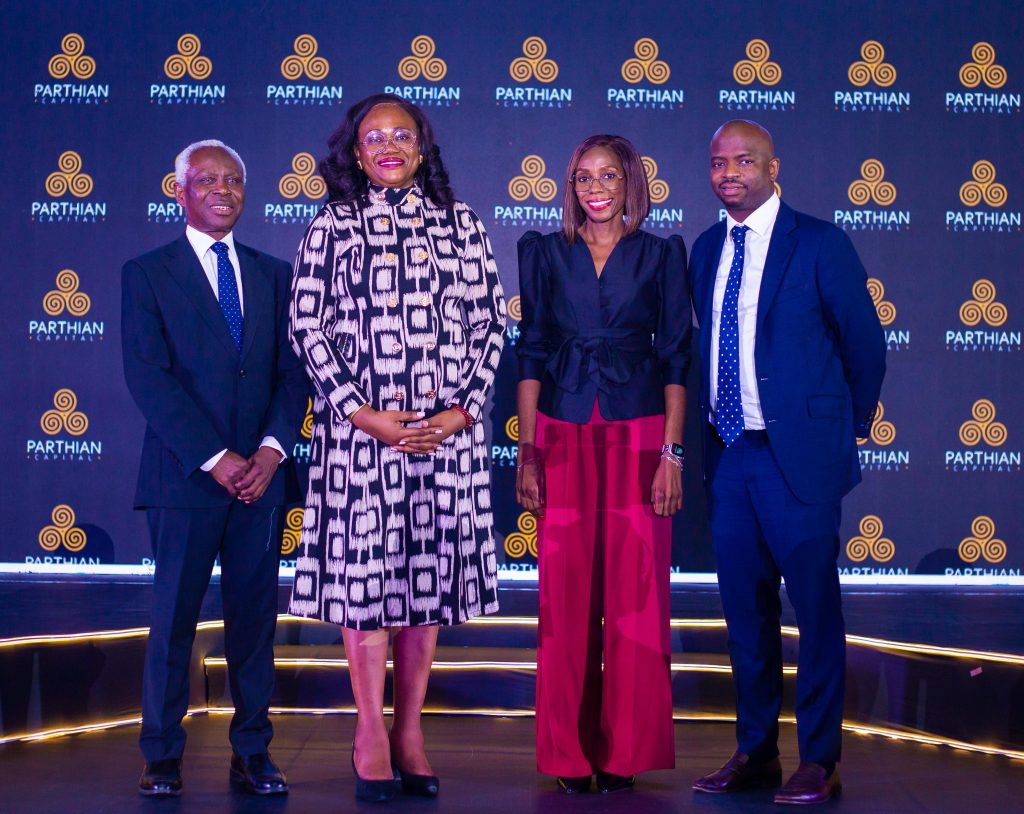
Parthian Capital Limited Expands Investment Opportunities with Two New Investment Funds Parthian Capital Limited, the asset management division of the Parthian Group, proudly announces the launch of two investment funds: the Parthian Money Market Fund and the Parthian Dollar Fixed Income Fund. These new offerings are designed to provide investors with secure and customised financial solutions, fostering long-term wealth preservation and growth. During the launch event, Group Managing Director, Oluseye Olusoga underscored the crucial role of the capital market in Nigeria’s economic development. “The capital market is the backbone of Nigeria’s economy,” he stated. “Our new funds are engineered to create long-term value and protect wealth for a diverse range of investors, retail, high-net-worth, and institutional alike. With these funds, we are providing the financial tools that will drive sustainable growth.” L-R: Olufemi Shobanjo, CEO, NGX Regulation; Olufunke Aiyepola, MD/CEO, UTL Trust Management; Abiodun Adebimpe, West Africa Regional Head, Custodial Services, Rand Merchant Bank; John Briggs, Lagos Head, Securities and Exchange Commission (SEC); Adedotun Sulaiman, MFR, Chairman, Parthian Partners; Ndidi Ukaonu, Director, Parthian Group; Ibilola Ashcroft, MD Designate, Parthian Capital; Oluseye Olusoga, Group MD/CEO, Parthian Group; Regina Asala, Rand Merchant Bank; Omowonuola Kunle-Bello, Head, Fund & Investment Manager Ratings, Agusto & Co; Benard Esan, Rep. of Company Secretary, Alsec Nominees; Oyindamola Ehiwere, CEO, Alsec Nominees. The Chairman of Parthian Group, Adedotun Sulaiman also emphasised the essential role of investments in economic development, stating, “Capital is the oxygen of the economy, and without capital, we can’t go very far.” Acting Managing Director of Parthian Capital Limited, Ms. Ibilola Ashcroft, expressed excitement about the new offerings. “We are thrilled to introduce our investment funds to the market,” she said. “Each fund is meticulously structured to provide secure, dependable, and diversified investment solutions that align with our clients’ financial aspirations.” Ashcroft further noted, “The Parthian Money Market Fund is designed to offer competitive returns while minimizing risk, allowing investors to optimise their portfolios without compromising on safety. Our team is dedicated to delivering personalised strategies that empower our clients to reach their financial goals.” L-R: Olufunke Aiyepola, MD/CEO, UTL Trust Management; Abiodun Adebimpe, West Africa Regional Head, Custodial Services, Rand Merchant Bank; Adedotun Sulaiman, MFR, Chairman, Parthian Partners; Ndidi Ukaonu, Director, Parthian Group; Ibilola Ashcroft, MD Designate, Parthian Capital; Oluseye Olusoga, Group MD/CEO, Parthian Group; Regina Asala, Rand Merchant Bank; Omowonuola Kunle-Bello, Head, Fund & Investment Manager Ratings, Agusto & Co The Parthian Money Market Fund is a low-risk, open-ended investment vehicle focused on capital preservation and steady income generation. It offers investors a secure way to manage cash through diversified investments in short-term money market instruments. Meanwhile, the Parthian Dollar Fixed Income Fund enables investors to diversify their portfolios with dollar-denominated securities, serving as an effective hedge against Naira depreciation while providing attractive returns. The formal launch event brought together key stakeholders, investors, and industry leaders to celebrate this milestone and gain insights into Parthian Capital’s innovative approach to wealth management. For more information about these investment funds and to explore detailed product information, please visit www.parthiancapitalng.com. L-R: Adedotun Sulaiman, MFR, Chairman, Parthian Partners; Ndidi Ukaonu, Director, Parthian Group; Ibilola Ashcroft, MD Designate, Parthian Capital; Oluseye Olusoga, Group MD/CEO, Parthian Group About Parthian Capital LimitedParthian Capital Limited is a leading asset management firm in Nigeria, offering tailored investment solutions to individuals and institutions. As part of the Parthian Group, the company is committed to driving financial inclusion and economic growth through innovative products and services.