Is Your Current Wealth Structure Built to Last For 20 Years?

Is Your Current Wealth Structure Built to Last For 20 Years? 10 Things to do to Preserve Your Legacy “I used to think my father was paranoid until I had to spend three years in court just to prove I was his daughter.” The woman speaking wasn’t a stranger to wealth. She had grown up in a house where imported rugs were replaced every season and summer was always spent in Europe. But when her father passed away in 2024, the “imported steak” lifestyle vanished behind a wall of red tape. Even though she was his eldest, a distant uncle challenged the will; the bank accounts were frozen, and the probate tax was a number she couldn’t pay without selling the family home at a discount. She realized then what most people in her circle refuse to say out loud: “Wealth in Nigeria isn’t a destination, it’s a structural challenge”. If you are reading this, you’ve likely built something significant. But unless the exit is engineered as carefully as the entry, the family is left with a “To-Do” list that could either cement a legacy or dismantle it. Here are 10 things that must be done to ensure wealth survives the transition. Draft a Family Constitution: A will says who gets what; a constitution says how the family behaves. It is a formal document that outlines the family’s mission, values, and rules for the family business. It answers the hard questions. Can a spouse work in the firm? What are the merit-based requirements for joining the board? Without a constitution, a dynasty is one argument from a decade-long lawsuit. Move Assets into Special Vehicles (SPV’S):Holding high-value assets in a personal name is an invitation to the “Probate Trap.” In the current Nigerian legal landscape, the government can claim up to 10% of an estate’s total value in fees before heirs can touch a kobo. By moving real estate and shares into an SPV (a private holding company) or a Trust, the assets belong to a legal entity that never dies. Transition becomes a simple transfer of shares, not a legal nightmare. Establish a Family Council: The worst time for children to start making collective decisions is at a funeral. A Family Council should meet quarterly to discuss the family’s investment performance. Giving heirs “voting power” on small, non-core investments today allows them to learn the weight of a decision while there is still a mentor in the room. Create an Emergency Liquidity Fund: Many Nigerian dynasties collapse not because they lack assets, but because they lack cash. If wealth is tied up in Ikoyi real estate and Agbara factories, who pays the taxes, the security, and the school fees during the months of estate settlement? A dedicated liquidity fund, often funded through a structured Life Insurance policy, provides the immediate cash needed to keep the lights on. Professionalize the Wealth Management: Wealth management is not a hobby for an accountant, it is a specialized institutional function. Sophisticated families are moving toward Virtual Family Offices. This means hiring independent advisors to provide unbiased reporting, tax optimization, and risk management. Wealth should be managed with the same rigor as a Tier-1 bank. Diversify Beyond The Usual Suspects: Real estate is the “old guard” of Nigerian wealth, but sustainability requires non-correlated assets. A resilient portfolio includes Eurobonds, global private equity, and commodity derivatives. If the local property market stalls, the family’s future shouldn’t stall with it. Implement a Third-Party Audit: One of the fastest ways for a family to go broke is through “leakage”, unvetted expenses, or poor accounting in family firms. Mandating a yearly external audit of the family’s collective balance sheet instills a culture of accountability in heirs from day one. It removes the emotion from the numbers. Institutionalize Philanthropy: Legacy is built on more than bank balances. Setting up a Donor-Advised Fund (DAF) or a Family Foundation serves as a “leadership lab” for heirs. By putting them in charge of a charitable budget, they learn fiduciary responsibility and how to evaluate “Return on Investment” before they ever touch the core inheritance. Close the Financial Literacy Gap: An Ivy League degree does not guarantee wealth management skills. Heirs must be taught about the difference between capital and yield, how inflation eats a 15% return, and why debt is a tool, not a lifestyle. If they do not speak the language of money, they will eventually lose money itself. Execute the Shadow Handover: The most successful families have a clear timeline for the transition of power. By moving from CEO to Chairman while still healthy, a founder allows the next generation to make mistakes under supervision rather than in a vacuum. The goal is to make the founder’s daily presence eventually unnecessary. So, ask yourself this question; “Is the current structure built to last for forty years, or forty months?”
Can Iraq’s Export Resumption Through Turkey’s Ceyhan Port, Turn the Tide in the Oil Markets?

Can Iraq’s Export Resumption Through Turkey’s Ceyhan Port, Turn the Tide in the Oil Markets? The escalation of the conflict involving the United States, Israel and Iran has delivered a significant shock to global energy markets, once again highlighting the vulnerability of oil supply to geopolitical disruptions. At the centre of the crisis is the closure of the Strait of Hormuz, a critical chokepoint that accounts for nearly 20% of global oil flows. Heightened security concerns and restricted tanker movements have materially tightened global supply conditions, driving oil prices above $120 per barrel at the peak of the crisis. In response, the International Energy Agency (IEA) announced a coordinated release of up to 400 million barrels from strategic reserves, which provided some near-term relief and helped moderate price pressures. Nonetheless, oil prices remained elevated, stabilizing slightly above the $100 per barrel mark. Amid these developments, Iraq has taken a strategic step by resuming crude oil exports via pipeline to Turkey’s Mediterranean port of Ceyhan, following an agreement between Baghdad and the Kurdistan Regional Government (KRG). This development introduces an alternative export route that bypasses the disrupted Gulf corridor and has been positively received by the market, with oil prices declining by about 1.46% on the news. Turning the Tide or Merely Slowing the Storm? While the initial market reaction suggests cautious optimism, a more critical question emerges: can Iraq’s resumption of exports through the Ceyhan pipeline materially alter current market dynamics, or does it simply provide temporary relief in an otherwise constrained environment? Prior to the crisis, Iraq was the second-largest crude oil producer in OPEC, with output exceeding 4 million barrels per day (mbpd) and exports of over 3 million barrels per day, largely through its southern terminals. However, the disruption of key export routes has significantly curtailed output, with production declining to approximately 1.3 mbpd, implying a supply loss of about 3 mbpd. Against this backdrop, the resumption of exports through the Ceyhan pipeline, currently estimated at around 250,000 barrels per day, with scope for gradual expansion, represents a meaningful, but limited, recovery. While this additional supply provides both psychological support and marginal relief in a tight market, it accounts for less than 10% of the disrupted volumes. This disparity underscores a key point: although the development is directionally positive, it is quantitatively insufficient to reverse the prevailing supply imbalance in global oil markets A Deeper Structural Constraint Beyond the immediate supply dynamics, the development highlights a broader structural issue within the global oil market, which is the increasing importance of access and logistics. The Strait of Hormuz remains a critical artery for global oil trade and is not easily substitutable. While alternative routes such as the Iraq–Turkey pipeline can provide short-term relief, they lack the scale, flexibility and efficiency required to fully compensate for disruptions in the Gulf. A Temporary Lifeline in a Fragile Market Iraq’s export resumption through the Ceyhan port should not be viewed as a turning point, but rather as a signal. It underscores the growing importance of diversified export infrastructure, highlights the role of geopolitical coordination in sustaining energy flows, and reinforces a new reality for global oil markets, one where supply is defined not just by production capacity, but by the ability to transport crude efficiently and securely. In a market where millions of barrels have been taken offline, the return of a few hundred thousand barrels per day is unlikely to reverse the broader trend. However, it may help to ease immediate pressures and provide a temporary buffer against further shocks.
Parthian Capital Limited Increases Investment Opportunities with Two New Investment Funds
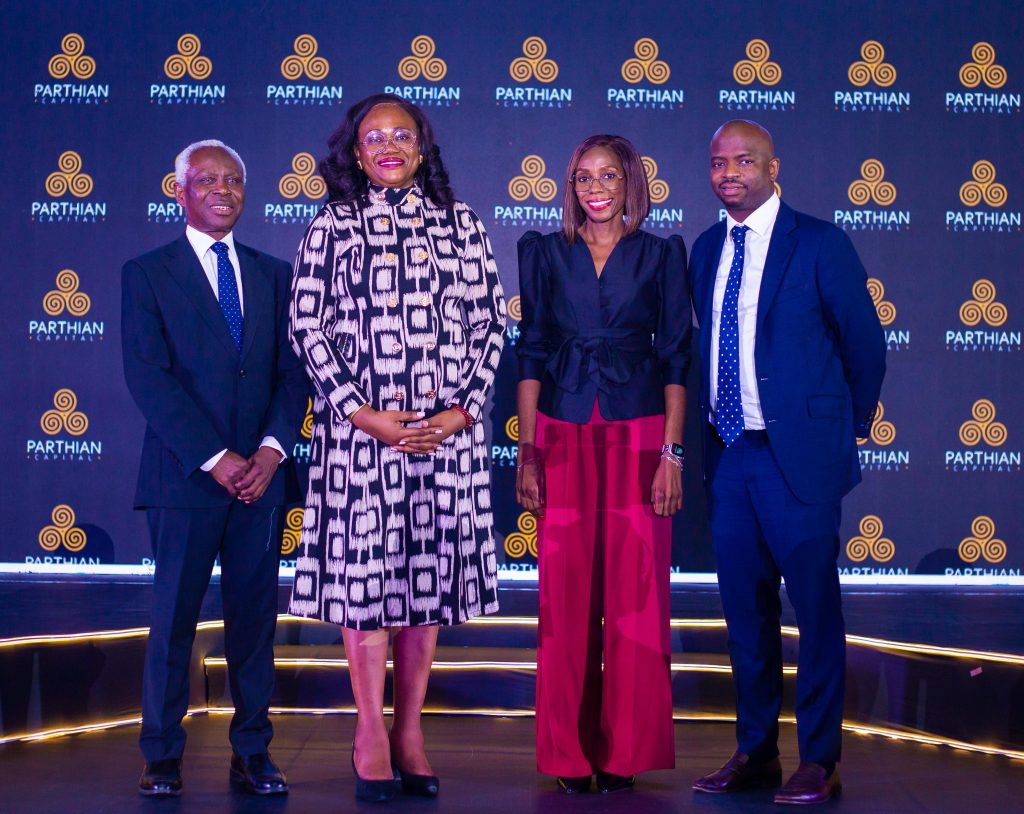
Parthian Capital Limited Expands Investment Opportunities with Two New Investment Funds Parthian Capital Limited, the asset management division of the Parthian Group, proudly announces the launch of two investment funds: the Parthian Money Market Fund and the Parthian Dollar Fixed Income Fund. These new offerings are designed to provide investors with secure and customised financial solutions, fostering long-term wealth preservation and growth. During the launch event, Group Managing Director, Oluseye Olusoga underscored the crucial role of the capital market in Nigeria’s economic development. “The capital market is the backbone of Nigeria’s economy,” he stated. “Our new funds are engineered to create long-term value and protect wealth for a diverse range of investors, retail, high-net-worth, and institutional alike. With these funds, we are providing the financial tools that will drive sustainable growth.” L-R: Olufemi Shobanjo, CEO, NGX Regulation; Olufunke Aiyepola, MD/CEO, UTL Trust Management; Abiodun Adebimpe, West Africa Regional Head, Custodial Services, Rand Merchant Bank; John Briggs, Lagos Head, Securities and Exchange Commission (SEC); Adedotun Sulaiman, MFR, Chairman, Parthian Partners; Ndidi Ukaonu, Director, Parthian Group; Ibilola Ashcroft, MD Designate, Parthian Capital; Oluseye Olusoga, Group MD/CEO, Parthian Group; Regina Asala, Rand Merchant Bank; Omowonuola Kunle-Bello, Head, Fund & Investment Manager Ratings, Agusto & Co; Benard Esan, Rep. of Company Secretary, Alsec Nominees; Oyindamola Ehiwere, CEO, Alsec Nominees. The Chairman of Parthian Group, Adedotun Sulaiman also emphasised the essential role of investments in economic development, stating, “Capital is the oxygen of the economy, and without capital, we can’t go very far.” Acting Managing Director of Parthian Capital Limited, Ms. Ibilola Ashcroft, expressed excitement about the new offerings. “We are thrilled to introduce our investment funds to the market,” she said. “Each fund is meticulously structured to provide secure, dependable, and diversified investment solutions that align with our clients’ financial aspirations.” Ashcroft further noted, “The Parthian Money Market Fund is designed to offer competitive returns while minimizing risk, allowing investors to optimise their portfolios without compromising on safety. Our team is dedicated to delivering personalised strategies that empower our clients to reach their financial goals.” L-R: Olufunke Aiyepola, MD/CEO, UTL Trust Management; Abiodun Adebimpe, West Africa Regional Head, Custodial Services, Rand Merchant Bank; Adedotun Sulaiman, MFR, Chairman, Parthian Partners; Ndidi Ukaonu, Director, Parthian Group; Ibilola Ashcroft, MD Designate, Parthian Capital; Oluseye Olusoga, Group MD/CEO, Parthian Group; Regina Asala, Rand Merchant Bank; Omowonuola Kunle-Bello, Head, Fund & Investment Manager Ratings, Agusto & Co The Parthian Money Market Fund is a low-risk, open-ended investment vehicle focused on capital preservation and steady income generation. It offers investors a secure way to manage cash through diversified investments in short-term money market instruments. Meanwhile, the Parthian Dollar Fixed Income Fund enables investors to diversify their portfolios with dollar-denominated securities, serving as an effective hedge against Naira depreciation while providing attractive returns. The formal launch event brought together key stakeholders, investors, and industry leaders to celebrate this milestone and gain insights into Parthian Capital’s innovative approach to wealth management. For more information about these investment funds and to explore detailed product information, please visit www.parthiancapitalng.com. L-R: Adedotun Sulaiman, MFR, Chairman, Parthian Partners; Ndidi Ukaonu, Director, Parthian Group; Ibilola Ashcroft, MD Designate, Parthian Capital; Oluseye Olusoga, Group MD/CEO, Parthian Group About Parthian Capital LimitedParthian Capital Limited is a leading asset management firm in Nigeria, offering tailored investment solutions to individuals and institutions. As part of the Parthian Group, the company is committed to driving financial inclusion and economic growth through innovative products and services.